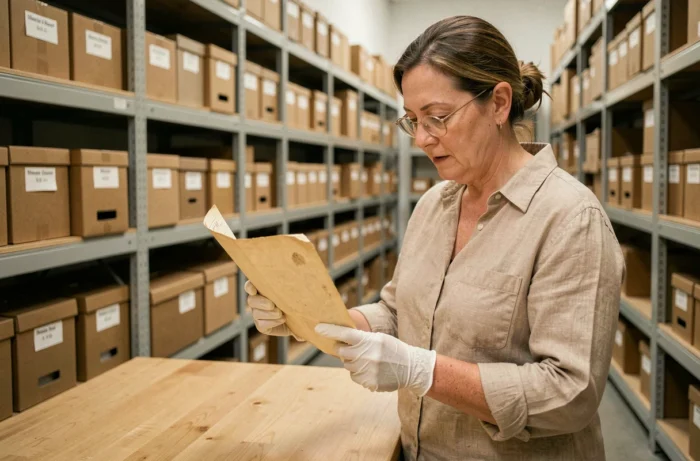
Archives are the documents produced or received by an individual or organization in the course of their activities and preserved for their administrative, legal or historical value. The work of an archivist involves collecting, organizing, preserving and making these documents available to the public. Over the past two years, the sector has undergone profound changes, driven by artificial intelligence, new research programs and collaborative digitization projects.
Artificial intelligence and archives: how the tools are changing things in practice
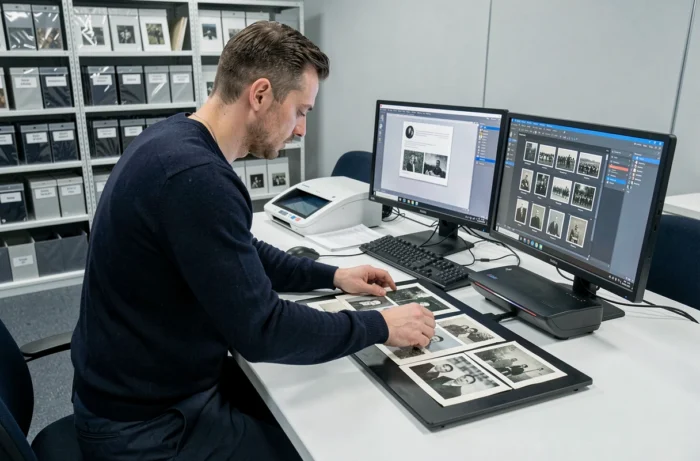
AI is no longer limited to automatically transcribing old manuscripts. The International Association of French-Speaking Archives (AIAF) dedicated a webinar to its broader applications: processing born-digital archives, automatically describing archival collections and guiding the public through virtual reading rooms.
These applications rely on probabilistic models. Handwriting recognition algorithms generate transcriptions with varying confidence levels, making systematic human review essential for documents with evidentiary value. Les Archivistes news keeps you up to date with these technological developments.
The AIAF webinar also highlighted two limitations that are rarely discussed:
- The energy costs of AI processing, which raise questions about sustainability for archival services operating on tight budgets.
- The probabilistic nature of the results, which means AI output cannot be treated as verified data without archival review.
- Dependence on external technology providers, which raises questions of sovereignty over heritage data.
Archivists are not being replaced by these tools. Their role is shifting toward the validation, configuration and governance of the data these systems produce.
Archival research programs: activism, adoption and the environment
Archival collections are serving as source material for several research programs recently launched in France, exploring subjects that have long been overlooked by historians.
MATOS: objects from activist movements since 1944
Running from 2025 to 2029, the MATOS program studies objects and archives from activist movements in France since the Liberation. Leaflets, banners, internal correspondence and photographs of demonstrations—documents often kept by associations or individuals—are gradually being added to public collections.
There are two archival challenges. First, ensuring that the provenance of every item can be traced. Second, describing collections that do not follow standard cataloging practices because they were assembled outside any institutional framework.
AdoptRisk: illicit adoption practices since 1923
Funded by the ANR and running from 2025 to 2029, the AdoptRisk program brings together the University of Angers, Paris 8 University and the CNRS. It examines illicit adoption practices in France, both domestic and international.
The archives used include court records, administrative correspondence and civil registers. Access raises questions about disclosure periods, as some documents contain sensitive personal data protected by regulations.
ARCHIVEX: archives and environmental expertise
Running from 2025 to 2026, ARCHIVEX explores how archives can support the work of environmental protection associations. The program shows that archives do more than document the past: they also inform contemporary assessments of water quality, soil pollution and changes to coastlines.
Collaborative digitization and cooperation between archival institutions
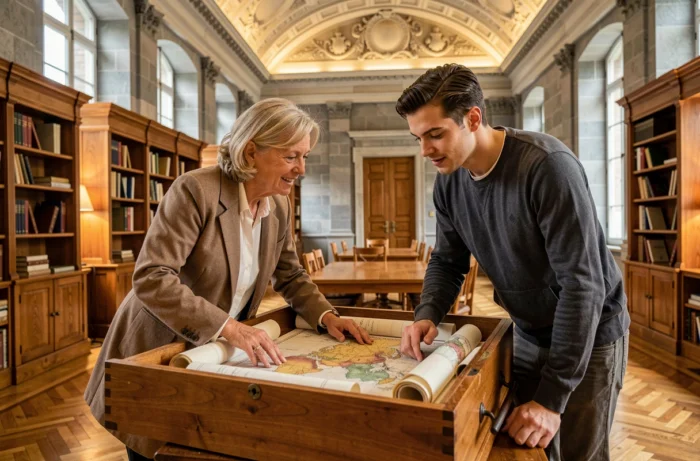
Digitizing departmental and national archival collections no longer relies solely on public funding. Cooperative projects between institutions help share costs and speed up the process of making documents available online.
The principle is simple: several archival services share a technical platform, digitization protocols and, in some cases, trained staff. Departmental archives take part in these networks alongside the National Archives and university partners.
Public participation is another way to help. The Girophares project, led by the National Archives, invites members of the public to describe digitized documents. This participatory approach speeds up the indexing of large collections while helping people understand what archival work actually involves.
Digitization is about more than scanning pages. Every digitized document needs standardized metadata (date, creator, reference number and content description) so it can be found through a search engine. Without this descriptive work, a digitized collection remains a set of unusable images.
Behind the scenes of archival work: more than just organizing documents
The archival profession is changing under the combined influence of digital technology, personal data regulations and growing demand for online access.
Coordination between archivists and data protection officers (DPOs) is becoming a key issue. The GDPR sets out retention and destruction rules that apply to documents containing personal data, including those in historical collections. Archivists must balance administrative retention periods, access restrictions and the right to erasure.
The work of itinerant archivists, who visit municipalities to process their collections, illustrates another side of the profession. These professionals work outside major archival centers, often alone, handling diverse collections stored in varying conditions. Their work combines assessment, appraisal, arrangement and helping local officials understand their legal obligations for records management.
These developments point to a profession in which information management, digital skills and knowledge of the legal framework are just as important as traditional expertise in organizing and preserving records. The MATOS program runs through 2029, as does AdoptRisk. French archives will continue to reveal documents that reshape our understanding of entire areas of contemporary history.