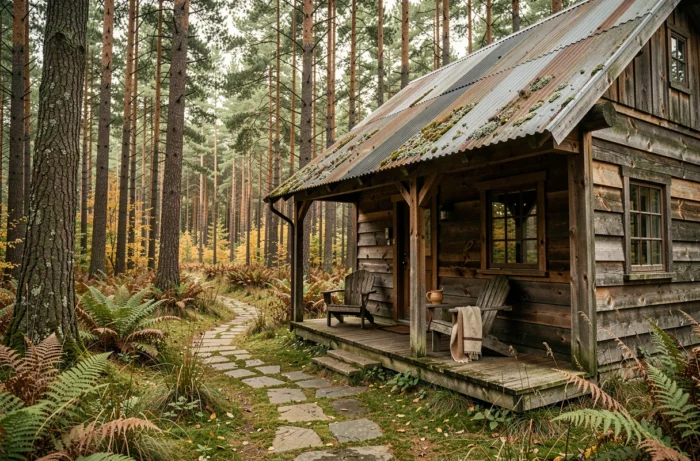
The market for charming nature stays in France has expanded considerably in recent years. Cabins, yurts, chalets, transparent bubbles: there is no shortage of options.
The optional star rating for furnished tourist accommodation is based on criteria relating to comfort, services and accessibility, but it does not certify a property’s authenticity or how well it is actually integrated into its natural surroundings. Choosing a nature getaway therefore means checking practical details beyond the image presented by booking platforms.
Official ratings and genuine charm: two different things
A three- or four-star rated furnished tourist rental meets a set of criteria covering floor space, amenities, sustainability and guest services. This rating is a useful indicator, but it says nothing about the quality of the natural setting, how quiet it is at night, whether there is a forest within walking distance or whether you can observe local wildlife.
The term “charming” has no regulatory definition. A host can describe their property as a “charming nature getaway” without any organization checking what that actually means. Comparing the official rating with recent photos, detailed reviews and the host’s direct answers to practical questions remains the most reliable approach.
Among the accommodations offered by Terres d’envies, transparency about the actual conditions of a stay is part of the approach offered to travelers seeking an immersive nature experience without unpleasant surprises.
Accessibility and transport: the risk of unexpected isolation
Most unusual accommodations in France are located in rural areas, sometimes several kilometers from the nearest shop or train station. What makes for a welcome change of scenery can become a real logistical challenge in certain situations.
Traveling without a car to a remote property requires some advance checking. Before booking, ask the host for clear answers to these three questions:
- Is there a shuttle, a transfer service from the train station or an accessible bus stop, and how often does it run outside peak season?
- Are the paths to the accommodation suitable for a stroller, wheelchair or heavy luggage, including in rainy weather?
- Is there mobile coverage in the area, and is a landline or other way to call for help available in an emergency?
Families with young children need to plan all their meals and supplies before arrival if there are no shops nearby. Some hosts offer baskets of local produce or partnerships with nearby producers, which can transform the experience.
People with reduced mobility face an additional challenge. A treehouse reached by a steep ladder or a yurt set on sloping ground will not suit everyone. Star ratings include accessibility criteria, but unrated accommodation is not subject to any such requirements. Asking about accessibility explicitly before booking helps avoid disappointment.
Environmental labels: what “eco-friendly” means in practice
Marketing language about nature and ecology has taken over accommodation listings. “Eco-lodge,” “green getaway,” “sustainable accommodation”: these terms do not, in themselves, correspond to any independently monitored certification.
The Clef Verte label is based on verifiable criteria, including water management, biodiversity and greenhouse gas emissions. It is one of the most concrete benchmarks for assessing a nature retreat’s environmental commitment.
A label does not tell you everything about day-to-day life at the property. It is still worth asking the host directly what their environmental commitments mean in practice:
- Waste sorting and composting: are guests expected to take part, and how?
- Water conservation: solar shower, dry toilet or standard plumbing?
- Protection of nearby natural areas: marked trails, restricted areas or specific guidelines?
- Getting around locally: are bikes available, are there walking paths to nearby attractions, or is a car needed for every outing?
A property that explains its environmental practices without being asked inspires more confidence than one that simply displays an “eco” icon on its listing.
Real comfort on a nature getaway: the details that make all the difference
Booking listings focus far more on the type of accommodation (treehouse, bubble, Mongolian yurt) than on the practical conditions of a stay. Yet everyday comfort depends on less photogenic details.
Heating, bathroom facilities and access in bad weather determine the real quality of a nature getaway. A yurt heated by a wood-burning stove in November in the Cantal and the same yurt in July in the Landes offer completely different experiences. The season can dramatically affect perceived comfort, yet few online listings explain this clearly.
Shared or outdoor bathrooms, common at the most immersive properties, suit some travelers but not others. A couple looking for a romantic getaway might be happy with an outdoor shower in summer. A family with a three-year-old in autumn, much less so.
It is also worth checking how far the property is from shops, restaurants and medical services. A charming forest getaway loses some of its appeal if the nearest doctor is a forty-minute drive away and there is no mobile coverage.
Rules for furnished tourist rentals: what travelers need to know
Rules governing furnished tourist rentals have changed recently in France, with requirements varying from one municipality to another. Some local authorities now restrict rental periods or require properties to be registered in advance.
For travelers, booking accommodation that is clearly identified and registered reduces the risk of a last-minute cancellation or dispute. Not all platforms verify the regulatory status of the properties they list.
Checking local rules before finalizing a booking, particularly in tourist areas where short-term rentals are strictly regulated, is simply common sense. A host who is transparent about their status and registrations offers an additional sign of reliability, beyond the charm shown in the photos.