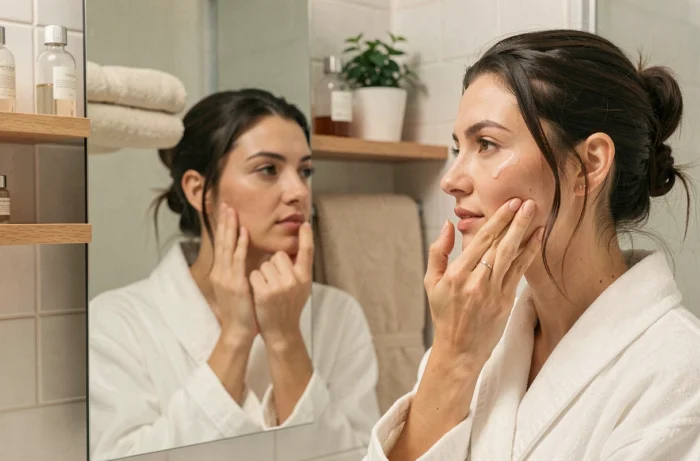
Skin reacts to what you apply to it, even when a product is described as natural. Pure plant oil, artisanal floral water or raw shea butter can cause redness, tightness or breakouts on some skin types. A daily natural beauty routine therefore calls for a little care to avoid unpleasant surprises and achieve visible results.
Natural cosmetics and the risk of irritation: what your skin can really tolerate
Have you ever noticed that an oil recommended everywhere leaves your skin red or greasy? It’s no coincidence. Natural ingredients contain active compounds (limonene, linalool, eugenol) that are among the most common allergens in cosmetics.
A homemade cream containing lavender essential oil can irritate sensitive skin. A lemon mask, often praised for its brightening effect, is photosensitizing and can cause dark spots in the sun. Natural does not mean risk-free for your skin.
Before adding a new ingredient to your routine, apply a small amount to the crook of your elbow and wait a day. This simple test can help identify an allergic reaction before it affects your face. For more information on skincare suited to different skin types, specialist resources are available: https://www.beautenature.net explores several practical approaches.
Atopic, reactive or rosacea-prone skin needs special care. For these skin types, limiting active ingredients to two or three per routine reduces the risk of cross-reactions. Make a habit of reading the INCI list, even on products certified organic.

Natural skincare routine: three daily steps are all you need
It’s tempting to pile on the products. Serum, oil, cream, mist, mask: too much skincare can tire the skin instead of nourishing it. A carefully chosen minimalist routine delivers better results than a dozen products used in the wrong amounts.
Gentle cleansing, morning and evening
In the morning, your skin isn’t dirty. It has produced sebum and shed dead skin cells overnight. A cleansing cream or floral water is enough—no scrubbing needed. In the evening, an oil-based product (such as jojoba oil or a cleansing balm) dissolves makeup and pollution residue. Then rinse with water and a gentle cleanser.
Double cleansing in the evening protects the skin barrier without stripping it. Avoid traditional high-pH soaps, which dry out the skin and can cause tightness.
Hydration tailored to the season
In winter, the skin loses more water because of indoor heating and cold weather. Shea butter or a rich cream with sweet almond oil helps make up for this loss. In summer, a lightweight texture (aloe vera gel, a serum with natural hyaluronic acid) hydrates without feeling heavy.
A common mistake is applying oil on its own in the belief that it hydrates. Oil nourishes but does not make up for a lack of water. Apply it after a hydrating product to seal moisture into the skin.
Sun protection, even on cloudy days
UV rays pass through clouds and windows. Applying lightweight sun protection every morning is the most effective anti-aging step you can take. Mineral filters (zinc oxide, titanium dioxide) are compatible with a natural skincare approach.
Body care and daily rituals beyond the face
The face gets most of the attention, but the rest of the body deserves the same regular care. A few simple steps can prevent dryness, roughness and discomfort without adding more products.
- Moisturize your body just after showering, while your skin is still damp, so the product absorbs better and helps retain moisture on the skin’s surface.
- Exfoliate once or twice a week with a gentle scrub (coffee grounds or fine sugar mixed with oil) to encourage cell renewal without irritating the skin.
- Care for your hands and nails with a plant-based butter in the evening, as they are among the areas most exposed to everyday stressors (water, cold and detergents).
Consistency matters more than the number of products. Repeating three steps every day can transform your skin’s texture in just a few weeks.

Tailor your natural beauty routine to your skin type
A product that works for oily skin can make dry skin worse. Knowing your skin type helps you avoid costly mistakes and disappointment.
- Oily skin: choose lightweight textures and astringent floral waters (witch hazel, rosemary), and avoid comedogenic oils such as coconut oil on your face.
- Dry skin: opt for rich oils and butters (avocado oil, cocoa butter) and cleansers without harsh surfactants.
- Combination skin: treat the T-zone (forehead, nose and chin) differently from your cheeks, using a mattifying product on targeted areas in the morning.
- Sensitive skin: keep the number of ingredients in each product to a minimum and avoid undiluted essential oils.
Does your skin feel tight after cleansing? The product is often the problem, not your skin. Switching cleansers resolves most morning discomfort.
Building a daily natural beauty routine comes down to three simple principles: use fewer products, choose them carefully and apply them consistently. The most useful step is also the least dramatic: observe your skin before adding a new product and accept that a popular ingredient won’t suit everyone.