
A travel journal that consists only of geotagged photos and restaurant lists misses the point. Its value lies in its ability to document logistical constraints, real-world conditions on the ground and itinerary changes—not in accumulating sunset shots. This travel journal for inspiring future getaways is built on that principle: every destination deserves a factual account, not a glossy showcase.
Entry requirements for Europe: what your travel journal should now include
The European Entry/Exit System (EES) began its gradual rollout on 12 October 2025. It replaces manual passport stamping with digital registration at the Schengen external borders for travelers covered by the system. A travel journal without a dedicated section for entry requirements is already out of date.
Another development to keep an eye on is ETIAS, a travel authorization for nationals of visa-exempt countries. It is expected to launch in 2027, though no exact date has been set. Websites claiming to process ETIAS applications already are not trustworthy: no official platform is operational.
These changes affect how you prepare for a trip to Europe. A well-organized journal should include a section for checking entry rules, updated before each departure just like reservations and itineraries. Travelers documenting their getaways in France or elsewhere in Europe should note the conditions they encounter at border crossings: waiting times, whether biometric kiosks are working, and the actual documentation requirements.
Destination-specific resources can help round out your preparations. For the Nordic countries, particularly Finnish, Swedish or Norwegian Lapland, lapland-unpacked.com brings together practical information to help plan a winter trip.
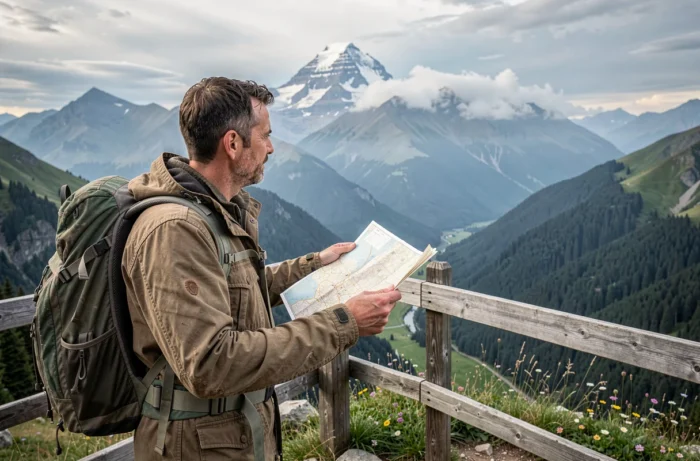
Photo journal or written travel journal: choose a format that holds up on the road
The format of a travel journal determines what you record and what you can take away from it months later. A purely photographic journal loses context when GPS metadata is missing or files are moved to another device. A written journal without visual references becomes a block of text that is hard to connect to the places you visited.
A hybrid format combining text and photos is the most useful, provided you follow a few documentation principles.
- Annotate each photo with the date, exact location and conditions (weather, crowds, closed or restricted access) at the time it was taken—not three weeks after you get home.
- Keep a synced digital copy: paper journals can be lost, soaked or torn. Scanning or photographing each page as part of your daily routine helps prevent losses.
- Set aside a section for raw practical information (prices observed, actual opening hours, transport route numbers) rather than mixing it into the narrative.
Digital journals (PDFs, dedicated apps, digital road books) offer keyword search and sharing, but offline access remains a weak point with some tools. A paper journal never runs out of battery. We find that the most methodical travelers use both formats without trying to keep everything in one place.
The trap of an overambitious journal
Planning twenty sections for each day of a trip is a sure way to abandon your journal by day three. Three sections are enough: place, notable detail, constraint encountered. The rest (narrative, sketches, collages) can be added when time allows, not treated as an obligation.
Getaways in France and Europe: plan an itinerary around constraints
Most travel journals organize itineraries around interests (heritage, food, nature). This approach works when you’re looking for inspiration. It falls short at the planning stage because it ignores the constraints that actually determine the route.
An itinerary built around constraints starts with the non-negotiables:
- Travel dates: number of days available and days of the week (some sites close on Tuesdays, others on Mondays).
- Mode of transport: a cycling route in France won’t follow the same roads as a van road trip. Elevation changes, the availability of protected bike lanes and access to drinking water can radically alter the route.
- Actual seasonal conditions: Lapland in December looks nothing like Lapland in June. Some of the Calanques near Marseille are closed on certain summer days due to wildfire risk. A useful travel journal notes these seasonal closures.
- Transport and accommodation budget: setting a daily budget before mapping out the route helps avoid constant adjustments on the road.
This constraint-based planning turns a travel journal from a keepsake album into a reusable planning tool for other travelers. Documenting why a route changed (road closure, weather, transport strike) is more valuable than recounting an ideal day.

Cycling and road trips: two different approaches to documentation
A cycling journal for France needs information that road-trippers in motor vehicles don’t use: elevation profiles, road surface conditions and the availability of bike repair shops. By contrast, a campervan or van road trip journal needs to document authorized parking areas, height restrictions and waste disposal points.
Mixing these two approaches in one journal creates clutter. Use a separate journal for each mode of transport or, at the very least, keep a clearly separated section for each type of trip so your notes remain useful.
On-the-ground documentation tips: what makes a travel journal valuable
Travel journals published online often repeat the same information as travel guides. The added value of a personal journal lies in what guides don’t cover: the gap between expectations and reality.
A museum advertised as accessible to people with reduced mobility, but whose elevator has been out of order for three months. A hiking trail marked on the IGN map but so overgrown that it’s impassable. A village described as a “hidden gem” on every blog but packed with visitors in peak season. These on-the-ground observations are the raw material of a useful journal.
Recording prices observed on site (meals, transport, admission fees) also helps future travelers plan their budgets. Online prices are often out of date or don’t reflect local surcharges.
Travel photography: beyond the scenery
The most useful photos in a journal aren’t panoramas. They’re photos of information signs, local maps, posted menus and timetables. They serve as a visual database. We recommend keeping them in a separate folder from your “souvenir” photos so you can find them quickly.
A travel journal built on these principles won’t go out of date. It becomes a resource travelers can consult before each new getaway—and one others can use without having to repeat the same scouting work. Your next destination deserves more than a blank page opened at the airport.