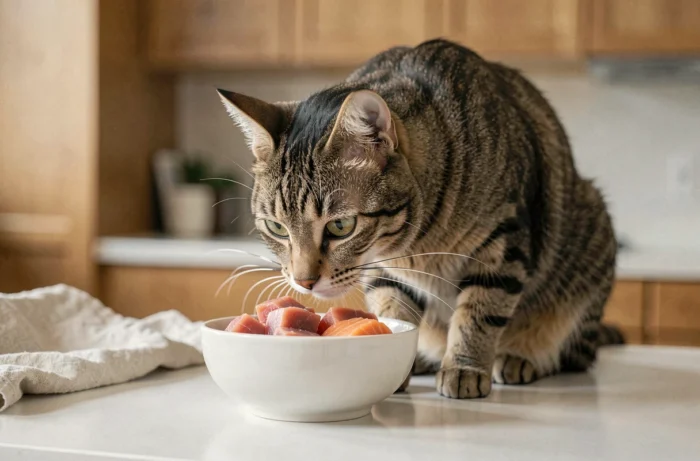
A cat that was sleeping deeply suddenly appeared in the kitchen as soon as a can of tuna is opened. This reflex is observed by almost all owners. It is not due to chance or greed: it can be explained by the biology of an animal that remains strictly carnivorous despite domestication. Understanding what truly attracts a cat to certain foods allows for better meal planning and helps avoid some common mistakes.
Umami receptors and smell: how the cat chooses its food
Before making a list of foods, it is essential to grasp a mechanism that is often overlooked. Cats have significantly fewer taste buds than humans. However, their sense of smell plays a crucial role in determining what they are willing to eat.
A study published in 2023 in the journal Chemical Senses showed that the umami receptor in cats responds to certain nucleotides found in animal tissues. Associated with specific amino acids, these nucleotides enhance the flavor sensation. It is this signal, and not sweetness (which cats hardly perceive), that guides their preferences towards meat and fish.
The smell can even outweigh the flavor indicated on the packaging. A recent study on nine commercial dry foods observed that the differences between brands were more pronounced than the differences between flavors within the same brand. Manufacturing processes and formulations alter the aromatic profile perceived by the cat, which explains why it sometimes refuses a new brand of chicken kibble while it loved the old one.
To better tailor your companion’s diet, you can discover Cani Essence’s tips on feline food preferences.
Raw or cooked meat: what cats prefer and what they digest
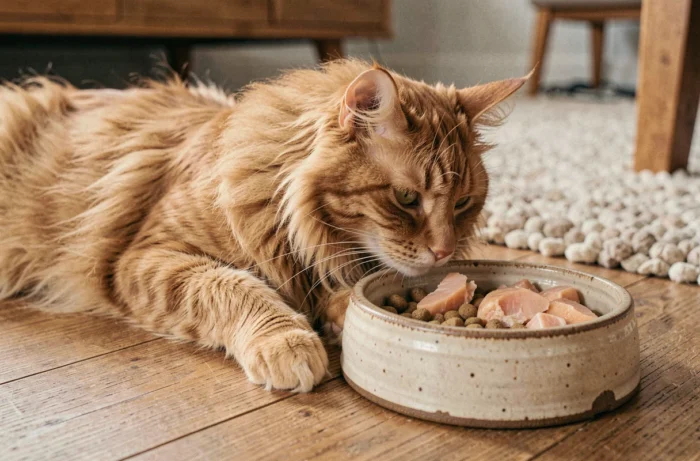
Meat remains the favorite food of the vast majority of cats. Chicken, turkey, beef, lamb: animal proteins trigger a strong appetitive response due to the amino acids and fats they contain.
Offal and prime cuts are not equal
Have you ever noticed your cat rushing for a piece of poultry liver? Offal (liver, kidneys) ranks among the most appreciated foods, sometimes even more than muscle cuts. Their richness in nutrients and pronounced smell explain this enthusiasm.
Be careful, liver is very high in vitamin A. Excess liver can cause severe poisoning, with bone and liver consequences. A small occasional piece is enough, not a whole meal.
Cooking and temperature matter as much as the cut
A cat generally prefers food that is warm, close to the temperature of freshly hunted prey. Serving a pâté straight from the refrigerator often deters a cat that would have devoured it at room temperature. It is the smell that is released better with heat, not the taste, that makes the difference.
- Plain cooked chicken (without seasoning) remains one of the best-tolerated and most appreciated foods by the majority of cats.
- High-quality raw beef appeals to many felines, but it must be fresh and sourced from a reliable source to limit health risks.
- Turkey is a lean alternative, often well accepted by cats with sensitive digestive systems.
Fish and seafood: between feline passion and precautions
The image of a cat devouring a fish is a classic. The reality is more nuanced: not all cats are attracted to fish. For those that are, the powerful smell of fatty acids plays a major role.
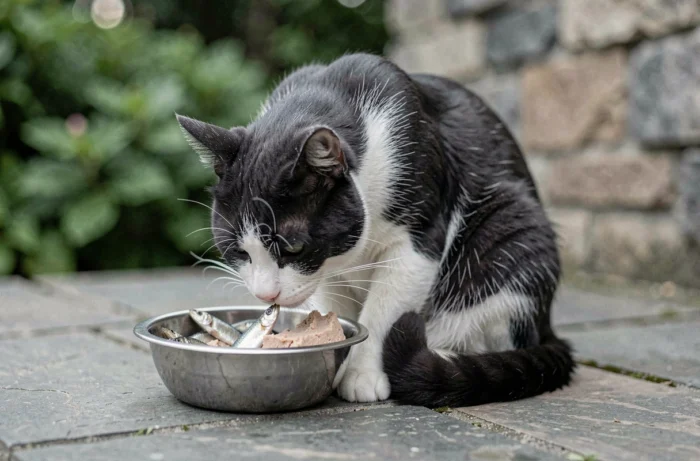
Canned tuna often triggers a spectacular reaction. Cooked salmon is also very popular. Shrimp, rich in protein and with a strong smell, are among the highly sought-after treats.
The problem lies in the frequency. Tuna intended for human consumption contains levels of mercury and salt that are unsuitable for a cat in the long term. Fish should remain an occasional supplement, not a dietary staple. Once or twice a week, in small quantities, is more than enough.
Dairy products, eggs, and plants: misconceptions about cat nutrition
The bowl of milk placed in front of the cat is part of the collective imagination. In practice, most adult cats poorly digest lactose. A small piece of hard cheese (lower in lactose) is better tolerated, but it remains a treat, not a daily food.
Cooked eggs interest some cats. Their amino acid profile is excellent, and the texture of the yolk attracts felines. Avoid raw eggs, which contain avidin, a protein that can hinder biotin absorption.
Cat grass and plants: a specific need, not a preference
Why does a strict carnivore nibble on grass? It is not a dietary preference per se. Grass helps expel hairballs and can soothe mild gastric irritations. A cat that eats grass is not seeking to feed itself, it is responding to a specific digestive need.
Some fruits like melon attract a few cats, probably due to aromatic compounds similar to certain amino acids. This behavior remains anecdotal and does not justify incorporating fruits into the daily diet.
Kibble or pâté: which format respects the cat’s tastes
The choice between kibble and pâté divides owners. From the cat’s perspective, pâté has a clear sensory advantage: its moisture releases more aromas, and its texture is closer to that of prey. Kibble, on the other hand, offers storage convenience and contributes to dental maintenance.
- Pâté is particularly suitable for cats that drink little, as it provides a significant portion of their daily hydration.
- High-quality kibble, rich in animal proteins and low in grains, is well accepted by most cats.
- Mixed feeding (free-choice kibble and scheduled pâté) often represents the best compromise between practicality and cat satisfaction.
A cat fed exclusively with one type of food since weaning can become neophobic, meaning it will refuse any new food. Varying textures and proteins from a young age reduces this risk and broadens the range of what the cat will accept to eat in adulthood.
A cat’s food preferences are shaped by its carnivorous biology, its early food experiences, and its owner’s choices. Observing your cat’s reactions to different textures and proteins remains the most reliable way to create meals that it will enjoy long-term, without compromising its health.