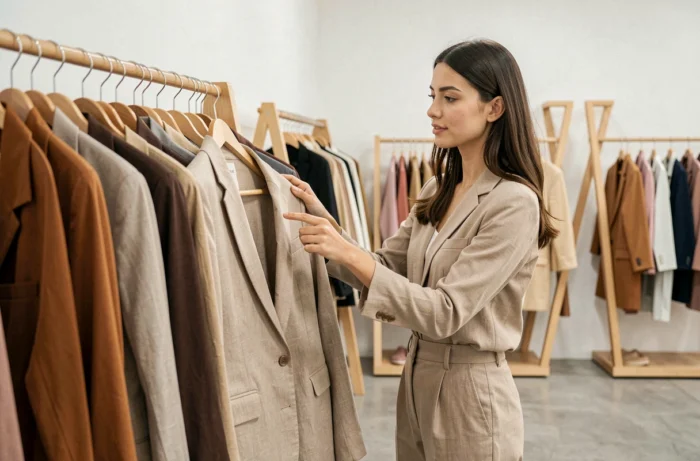
Zara dominates fast fashion thanks to a very short renewal cycle and a positioning between accessible luxury and tight prices. Looking for an alternative involves setting three specific criteria: the desired style, the actual budget per worn item, and guarantees on the lifespan of the pieces. The market today offers brands that each cater to a different shopping profile, well beyond the simple question of the displayed price.
Cost per wear: the criterion that changes the comparison between fashion brands
The price on the label says almost nothing about the value of a garment. A top costing twenty euros worn three times is more expensive in use than a top costing fifty euros worn thirty times. This calculation, known as cost per wear, allows for comparison between brands with very different price ranges on a common basis.
Applying this reasoning alters the usual hierarchy. A brand like Uniqlo, whose basic items made from thick cotton or technical knit withstand dozens of washes, often becomes more economical than a trendy piece at a bargain price. Conversely, some expensive capsule collections do not hold up better than a fast fashion item if the fabric is thin or poorly assembled.
When exploring alternatives to Zara on the market, it becomes clear that the durability of the fabric and the finishing of the seams weigh as heavily as the brand’s marketing positioning. Before purchasing, turning the garment inside out and checking for excess stitching, the consistency of the topstitching, and the exact composition of the fabric remains the most reliable action.
European regulation on unsold textiles: a concrete selection filter
The European Union is gradually prohibiting large companies from destroying unsold clothing, accessories, and shoes. This ban does not apply to small businesses but directly targets major players in fast fashion.
This regulatory framework creates an objective comparison criterion between brands. A brand that manages its stock through massive clearance sales or traceable donations stands out from another that has previously produced without limits and then destroyed the surplus. For consumers, this rule means that collections should gradually tighten in volume, with series more closely aligned with actual demand.
The revision of the framework directive on waste also provides that member states can adjust the financial contributions of brands based on their practices. Brands that renew their collections at a very rapid pace could face higher eco-contributions, which could ultimately be reflected in prices.
Fashion alternatives by shopping profile: style, budget, and sustainability
Comparing all brands in a single list obscures the differences in positioning. Three shopping profiles stand out clearly.
Sustainable basics at controlled prices
Uniqlo and COS occupy this segment. Uniqlo focuses on textile innovation (thermoregulating fabrics, long-lasting stretch denim) and stable cuts from season to season. COS offers streamlined lines with often denser materials. Both brands prioritize the repetition of models over constant renewal, making it easier to replace a worn piece with an identical one.
Trendy pieces at low prices
H&M and Mango come closest to the Zara model in terms of collection rhythm. The difference lies in the choices of cut and finish. Mango targets a slightly dressier range, with structured blazers and flowing fabrics. H&M covers a broader spectrum, from streetwear to semi-formal, with more marked quality variations from one range to another.
Responsible fashion and emerging labels
Brands like NA-KD (Sweden) or Damson Madder cater to an audience sensitive to traceability. Their limited series production reduces the risk of surplus. Prices are generally higher than at Zara, but the cost per wear remains competitive if the pieces are worn regularly.
Second hand and repair: the alternative that is not a brand
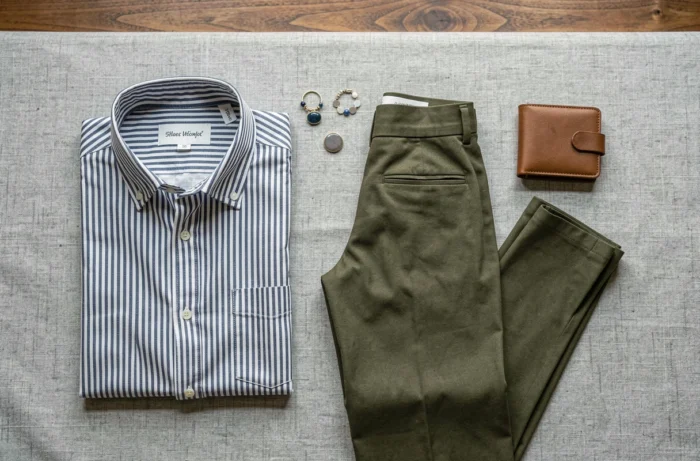
Comparisons between brands often overlook the most direct option: buying second-hand or prolonging the life of an existing garment. Second-hand eliminates the issue of overproduction and offers a very low cost per wear since the initial purchase price has already been amortized.
Several criteria make this option relevant:
- Zara pieces themselves resell well on second-hand platforms, allowing for a wardrobe refresh at a lower cost while sticking to familiar cuts.
- Repairing (alterations, zipper replacements, stitching repairs) often costs less than buying new and extends the lifespan of a garment by several years.
- Combining second-hand and targeted new purchases allows for building a varied wardrobe without relying on a single brand.
The choice between second-hand and new purchases depends on the type of piece. Structured basics (jeans, coats, blazers) resell very well. Trend-driven pieces quickly lose their appeal in the second-hand market, which argues for a low-priced new purchase if the piece will only be worn for one season.
Quick comparison grid of alternatives to Zara
| Criterion | Uniqlo | Mango | COS | NA-KD | Second hand |
|---|---|---|---|---|---|
| Price positioning | Moderate | Moderate | Medium-high | Medium | Low |
| Collection rhythm | Slow | Fast | Seasonal | Capsules | Variable |
| Textile durability | High | Variable | Good | Fair | Already tested |
| Dominant style | Streamlined basics | Urban chic | Minimalist | Scandinavian trend | Any style |
The choice of an alternative to Zara is best framed in terms of specific needs rather than a global brand. A functional wardrobe often combines multiple sources, from Uniqlo basics to Mango blazers, alongside a vintage piece found in a thrift store. European regulation on unsold items and eco-contributions adjusted according to production pace will gradually redistribute the cards among brands, making this type of arbitration even more relevant in the coming seasons.