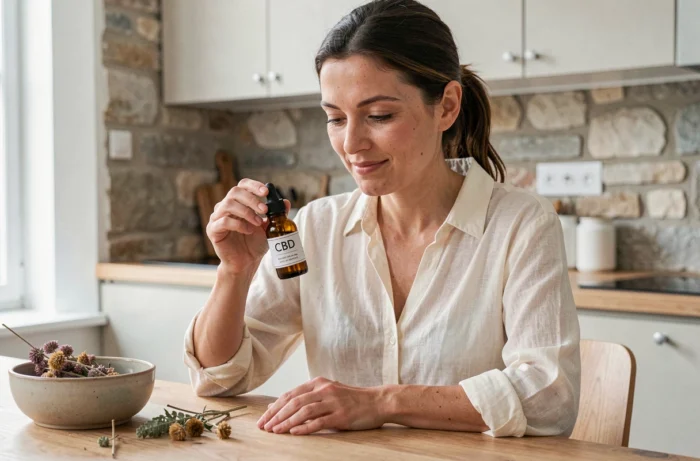
CBD in France is no longer just a niche market fueled by curiosity. The regulatory framework has tightened, synthetic cannabinoids blur the lines, and the drug interactions of cannabidiol remain underestimated by a large portion of consumers.
Synthetic Cannabinoids and CBD: A Risk of Confusion in the French Market
In 2024, the ANSM classified several substances as narcotics: H4-CBD, H2-CBD, HHCPO, and THCP. These molecules, sold under names similar to cannabidiol, do not have the same pharmacological profile or legal status as CBD extracted from hemp.
The DG Santé reported a concerning rise in cannabinoid intoxications since the beginning of 2025, particularly among adolescents.
The problem for consumers is real: a product labeled “CBD” may contain undeclared synthetic cannabinoids. Online shops that list their products on platforms like 16h20.fr generally display analysis certificates, but not all sellers adhere to transparency.
- Always check for the presence of a certificate of analysis (COA) mentioning the complete cannabinoid profile of the product
- Exclude any product bearing the mentions H4-CBD, HHC, HHCPO, or THCP, now classified as narcotics
- Prefer extracts from hemp varieties listed in the European catalog, with a THC level compliant with the current regulatory threshold
CBD and Drug Interactions: What Product Labels Don’t Specify
In March 2025, the ANSM warned about possible interactions between CBD and medications. Cannabidiol inhibits certain enzymes of the cytochrome P450, a hepatic system involved in the metabolism of many common treatments.
Anticoagulants, antiepileptics, immunosuppressants: the list of affected therapeutic classes is long. CBD can increase or decrease the plasma concentration of these molecules, altering their effectiveness or amplifying their side effects.
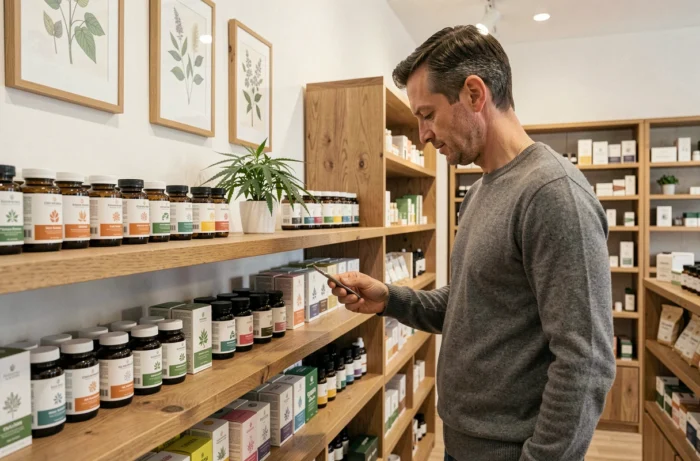
This information is rarely found on the labels of CBD oils or flowers sold in France. A medical or pharmaceutical opinion is recommended before any regular consumption, especially in the case of chronic treatment. We observe that this warning is absent from the majority of commercial websites.
CBD and Driving in France: The Trap of Saliva Testing
The legality of a CBD product offers no protection during a roadside check. On June 21, 2023, the Court of Cassation ruled that the presence of THC detected constitutes the offense of driving after using narcotics, even if the consumed product was legally marketed.
The saliva test looks for THC, not CBD. A product containing traces of THC within the legal limit may be enough to trigger a positive result depending on individual sensitivity, the dose consumed, and the timing of the check.
The consequences are severe: license suspension, criminal charges, criminal record. No commercial argument (product “legal,” “certified,” “THC-free”) constitutes a valid defense in court if the test is positive.
CBD Flowers and Residual THC Levels
CBD hemp flowers present the highest risk of residual THC. Unlike purified oils or isolates, the flower retains its entire cannabinoid profile, including traces of THC that can sometimes be close to the regulatory threshold.
A compliant batch on the certificate of analysis may vary from one harvest to another. Caution dictates avoiding driving in the hours following the consumption of CBD flowers, regardless of the labeling on the packaging.
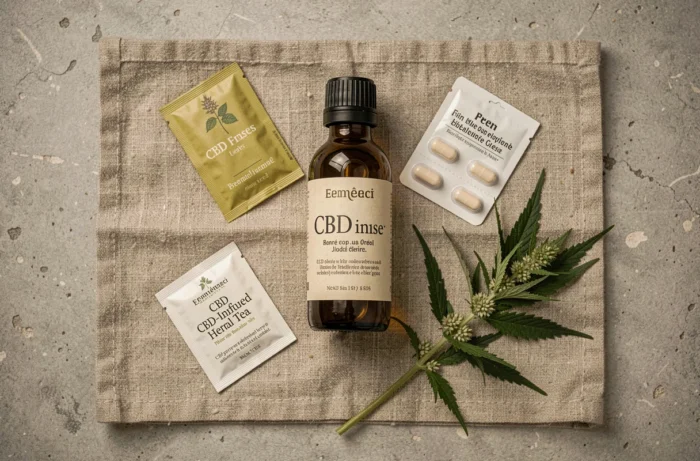
Available CBD Forms in France: Technical Selection Criteria
The French market offers several formats whose effectiveness and bioavailability vary significantly.
- Sublingual oils: rapid absorption through the oral mucosa, higher bioavailability than traditional ingestion. The spectrum (isolate, broad spectrum, full spectrum) determines the presence or absence of other cannabinoids and terpenes
- Flowers and resins: consumption by vaporization or infusion. Complete cannabinoid profile but residual THC levels to monitor
- Topical cosmetics: local action on the skin, no significant systemic passage. Relevant for targeted skin issues
- Capsules and edibles: lower bioavailability due to first-pass hepatic effect, but precise and discreet dosing
The choice between full spectrum and CBD isolate is not merely a matter of preference. A full spectrum extract contains all the cannabinoids, terpenes, and flavonoids from hemp. The so-called “entourage effect” suggests a complementarity between these compounds, but it also implies the presence of traces of THC.
Quality of CBD Oils: What Distinguishes a Good Product
Supercritical CO2 extraction remains the reference method. It preserves the molecular profile without solvent residue. Ethanol or hydrocarbon extractions, which are less expensive, may leave undesirable traces if the purging process is insufficient.
A quality product displays complete traceability: origin of the hemp, extraction method, certificate of analysis from an independent third-party laboratory. The absence of any of these elements should be enough to rule out the product.
Legal Framework for CBD in France: A Still Evolving Regulation
Hemp flowers and leaves have been authorized for sale since the Council of State suspended the ban targeting them. The THC level in finished products must remain compliant with the current regulatory threshold.
An evolution regarding CBD-based food products is underway at the European level, through the Novel Food procedure. As long as this authorization is not finalized, the marketing of dietary supplements containing CBD remains in a regulatory gray area in France.
We anticipate a tightening of controls on synthetic cannabinoids in the coming months, given recent health reports. For plant-derived CBD, the trend is towards a gradual normalization of the market, provided that industry players maintain verifiable quality standards.
CBD in France finds itself at a crossroads: a product whose potential for well-being and sleep interests a growing portion of the population, but whose responsible use requires verifying the actual composition, consulting a healthcare professional in case of treatment, and understanding the legal limits related to driving.